What is a Jack, How to Use It, and What is its Purpose?
A jack is one of the essential pieces of equipment used in vehicle maintenance or tire changes. It is a mechanical or hydraulic lifting device used to raise a specific part of the vehicle off the ground in a controlled manner. It serves as an important aid, especially during tire changes, certain maintenance operations, and emergency road situations.
For safe use, the equipment must be placed in the correct location, its lifting capacity checked, and the ground must be suitable. Incorrect use can lead to the vehicle sliding, damage to the equipment, or injuries. Knowing the location and operation of the jack in your vehicle before your trip will help you be better prepared for unexpected situations.
What is a Jack Used For and How Does its Basic Function Work?
A jack is a system that allows lifting vehicles weighing tons by multiplying physical force with the help of mechanical or fluid pressure. Models included as standard equipment in automobiles are generally produced to suit emergency scenarios where drivers can intervene alone on the roadside.
The system basically transmits the applied vertical force to the axles and disconnects the wheel from the ground. However, road-type passenger car jacks are designed to raise only a single wheel corner to be worked on, rather than lifting the entire body.
What Service Operations Are Jacks Used For and What Are Their Limitations?
This lifting equipment mostly plays an active role in the process of changing flat tires with spares. However, it is also used to tighten wheel nuts, clean rims, perform simple suspension checks, and expand the work area in temporary service interventions.
However, it is vital to know the working limits of jacks; these devices only function to raise the load momentarily and are not a permanent support mechanism. If detailed maintenance or undercarriage repair is to be performed under the vehicle, one should not go directly under the vehicle while it is suspended by the jack; professional stabilizers such as a jack stand must be added.
What Are the Types of Jacks?
Jack types vary according to their working principle, lifting capacity, and area of use. The most common options are scissor jacks, hydraulic bottle jacks, and hydraulic garage jacks.
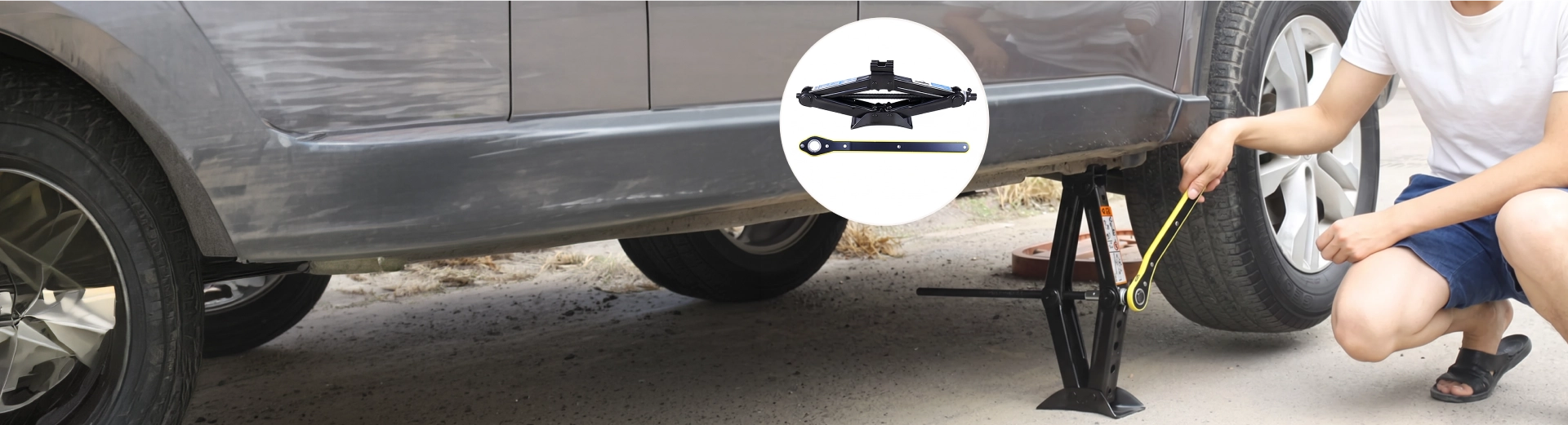
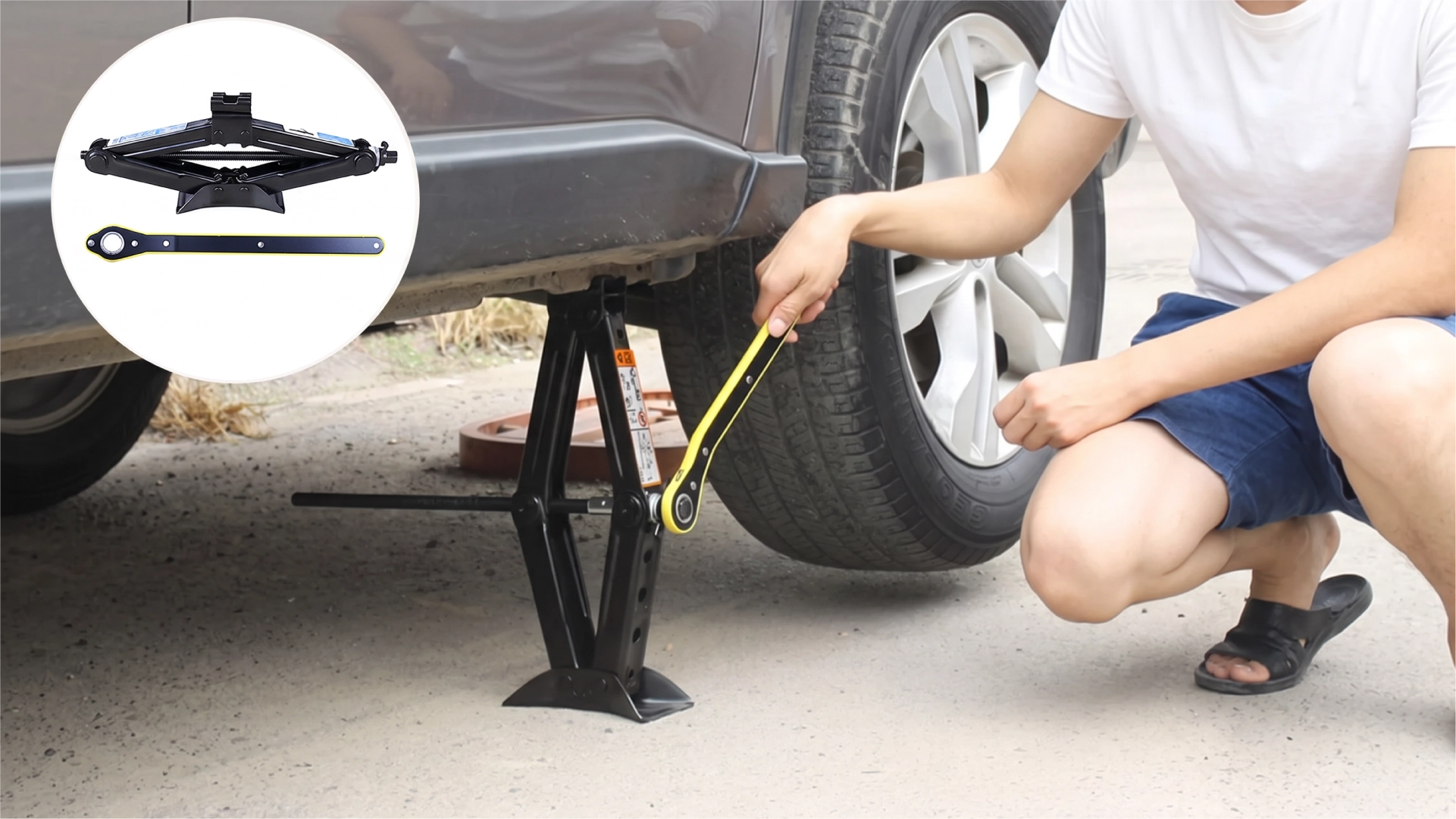
- Scissor jacks are found in the trunks of many cars. Thanks to their compact structure, they are easy to transport. It operates with a mechanical screw system, and the vehicle rises as the handle is turned.
- Hydraulic bottle jacks can provide higher lifting capacity. However, due to their body height, they may not easily fit under low-clearance vehicles.
- Hydraulic garage jacks, on the other hand, are mostly preferred in service centers or private garages. Thanks to their wheeled bodies, they can be easily positioned under the vehicle.
When choosing a model, you should also consider features such as minimum height, maximum lifting level, and base width in addition to the lifting capacity.
How to Use a Jack? Step-by-Step Application
First, choose a safe area that does not obstruct traffic. Turn off the engine and apply the parking brake. In vehicles with automatic transmissions, put the gear in P position. In manual vehicles, shift to the appropriate gear that will prevent the vehicle from moving.
After securing the wheels on the ground with chocks, find the chassis lifting point indicated in the owner's manual. Align the contact surface of the jack precisely with this point and ensure that the base is firmly on the ground.
Slowly raise the vehicle. In the first few centimeters, check whether the equipment is tilting or the base is slipping. If everything is balanced, continue the lifting process until the wheels leave the ground.
What Should Be Considered for Safe Jack Use?
Safe use begins with appropriate equipment, a solid surface, and the correct lifting point. You should avoid sloping, loose, sandy, muddy, or slippery surfaces.
Check the lifting capacity before use. Standard car jacks may not be sufficient, especially for SUVs, light commercial vehicles, or heavier models.
You should also check the physical condition of the equipment. Bent parts, cracks, worn mechanisms, or hydraulic oil leaks can prevent safe operation. Damaged parts should not be used.
No passengers should be inside the vehicle while it is being lifted. The engine should not be started, and the vehicle should not be moved. Accessing a raised vehicle with only jack support poses a serious risk. If work is to be done on the underside, professional support equipment should be used.
Where to Place the Jack When Changing a Tire?
The jack should be placed at the lifting point specified by the vehicle manufacturer. These points are usually located near the wheels and at the lower edge of the body.
The exact location may vary depending on the make and model. You can find the most accurate information in the vehicle's owner's manual. Choose the most suitable lifting point closest to the corner where the flat tire is located.
Securely place the jack's lifting head onto the support point. Ensure that the base is firmly on the ground. Lift the vehicle in a controlled manner and stop lifting when the wheel is sufficiently lifted off the ground.
After completing the tire operation, lower the vehicle slowly. Especially in hydraulic models, suddenly opening the valve can cause the vehicle to drop quickly.
What Should You Pay Attention to When Choosing a Jack?
When choosing a new jack, the first thing you should do is compare your vehicle's weight and the equipment's lifting capacity. A product with insufficient capacity is not safe. The vehicle's ground clearance is also important in the selection process.
Low-clearance cars may require models with a lower minimum working height. For SUVs or light commercial vehicles, the maximum lifting level becomes more important.
Size and weight should also be considered when transporting equipment in the trunk. Scissor lift models offer an advantage for emergencies due to their compact design.
For home or service use, wider-based hydraulic models may be preferred. Taking into account the manufacturer's safety instructions and the recommendations in your vehicle's owner's manual will help you make the right choice.
How to Maintain and Store a Jack?
For the jack to function safely, it needs to be checked at regular intervals. Equipment that has been stored in the trunk for a long time may develop rust, dirt, or mechanical problems.
Keep screws and moving parts clean in mechanical models. Check for oil leaks or pressure loss in hydraulic models. If the jack lowers itself under load, it should be serviced before use.
Storing the equipment in a dry area reduces the risk of rusting. Securing it is also important if it is being transported in the trunk. Loose metal equipment can create a hazard during sudden braking.
It is useful to check the jack, lug wrench, and spare tire together before long journeys.
What is a Jack? Key Points for Safe Use
A jack is one of the essential vehicle equipment that allows you to raise a part of your vehicle in a controlled manner during tire changes and certain maintenance procedures. For safe use, the load capacity, ground conditions, and lifting point should be evaluated together.
It is important to review your vehicle's owner's manual before use. Knowing where the lifting points are located beforehand will save you time in case of a problem on the roadside.
You should also remember that the jack is designed only for lifting purposes. If work is to be done under the vehicle, fixed support equipment must be used.
Check Your Vehicle Equipment for a Safe Journey
Knowing the basic equipment in your vehicle helps you move more controllably in unexpected road situations. In addition to the jack, it is useful to regularly check equipment such as a spare tire, lug wrench, and reflector.
Checking tire pressures and examining the physical condition of the tires before a trip can reduce the likelihood of experiencing problems on the road. Reviewing the basic maintenance needs of the vehicle before long journeys also ensures a safer driving experience.
To make your journeys uninterrupted and comfortable, you can consider Enterprise car rental options; you can choose the model that best suits your daily or long-term transportation needs with a single click.