
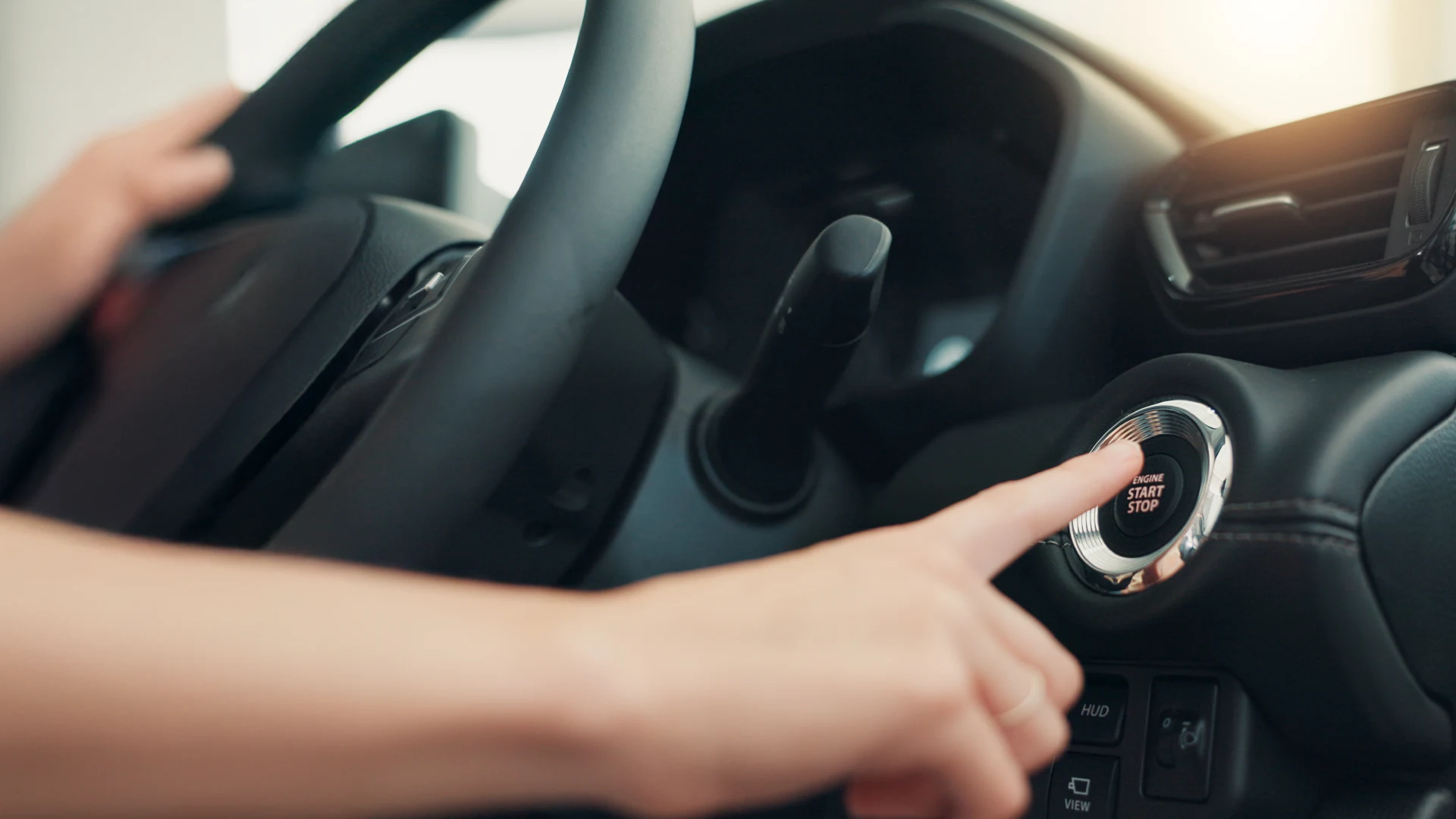
What Is the Start/Stop Button and How Does It Work?
There are small details in daily driving that consume fuel without us even noticing. The start/stop system comes into play exactly at this point. Designed to prevent the engine from running unnecessarily during stop-and-go traffic, the start/stop system plays an important role in modern vehicles in terms of both economy and the environment. Although it may seem like a minor feature for the driver, there is a well-structured operating logic behind it.
What Is Start/Stop?
In simple terms, the answer to the question what is start/stop is this: it is a system that automatically turns off the engine when the vehicle stops and restarts it when it begins moving again. At traffic lights, in heavy traffic, or during short stops, the engine does not continue running unnecessarily. When the driver presses the brake or the vehicle comes to a complete stop, the system is activated; when the vehicle moves again, the engine restarts.
Thanks to this structure, start/stop contributes to reducing fuel consumption, especially in urban driving.
How Does Start/Stop Work?
The question how does start/stop work is important for drivers who are curious about the system’s background. When the vehicle comes to a complete stop and the gear position is appropriate, the system shuts off the engine. When the accelerator pedal is pressed or the clutch is released, the engine restarts within seconds.
During this process, the vehicle’s battery, starter system, and engine control unit operate together. Unlike a standard starter system, this structure is supported by components designed to withstand frequent starting and stopping. This makes the start/stop system suitable for long-term use.
What Is the Purpose of Start/Stop?
The question what does start/stop do is important for those who want to understand not only its technical aspects but also its impact on daily use. The primary purpose of the system is to reduce fuel consumption by stopping the engine when the vehicle is stationary. Especially in city traffic, the time spent idling can lead to significant fuel loss without being noticed. By preventing the engine from running unnecessarily, the start/stop system reduces consumption and also helps decrease carbon emissions. As a result, urban driving becomes more balanced and efficient.
Effects of the Start/Stop System on Driving Experience
In vehicles used for the first time, the engine stopping and restarting may feel unusual to the driver. However, adaptation happens quickly. Since the engine does not run unnecessarily, interior noise levels decrease and the fuel gauge moves more slowly.
In addition, the vehicle feeling “quieter” in stop-and-go traffic indirectly contributes to driving comfort. During long waits at red lights, having the engine turned off becomes a small yet impactful detail in city life.
How to Use Start/Stop
The question how to use start/stop is particularly important for new vehicle owners. In most vehicles, the system operates automatically and requires no additional action from the driver. When you start the vehicle, the start/stop system becomes active and engages under suitable conditions.
Drivers should note that the system may not always operate in certain situations:
When the engine is cold
When the battery is not sufficiently charged
When the air conditioning is operating at high power
In such cases, the system may temporarily deactivate. This does not indicate a malfunction but rather the vehicle’s self-protection mechanism.
Disabling the Start/Stop System
Some drivers may feel uncomfortable with the system frequently activating and deactivating in heavy traffic. In such cases, the question how to disable start/stop may arise. In most vehicles, the system can be temporarily turned off by pressing a dedicated button on the console.
However, this deactivation is not permanent. Each time the vehicle is restarted, the start/stop system becomes active again. This shows that manufacturers encourage the default use of the system.
Advantages and Limitations of the Start/Stop System
Like any technology, the start/stop system has both strengths and weaknesses.
Advantages:
Provides fuel savings in urban driving
Reduces emission levels
Prevents unnecessary idling
Lowers noise levels
Limitations:
Requires an adjustment period for some drivers in frequent stop-and-go traffic
Requires a more durable battery and starter system
May activate later in cold weather
With these characteristics, start/stop may create different experiences depending on driving habits.
Which Vehicles Have the Start/Stop System?
Today, many passenger cars and light commercial vehicles offer the start/stop system as standard or optional equipment. In particular, most vehicles produced within the last decade include this technology.
The system is adapted according to engine type, operating with different configurations in diesel and gasoline engines. As a result, start/stop is no longer an exceptional feature but a widespread one.
Long-Term Impact of the Start/Stop System on the Vehicle
One of the most frequently asked questions is whether frequent engine restarts cause damage. However, in vehicles equipped with start/stop, the starter motor and battery are specially designed for this system.
Therefore, when functioning properly, the system does not harm the vehicle. On the contrary, by preventing unnecessary engine operation, it may even help reduce wear on certain components.
Fuel Savings Provided by Start/Stop
Especially in urban driving, start/stop can have a noticeable impact on fuel consumption. According to expert data, in heavy traffic conditions, the system can reduce fuel consumption by approximately 5% to 10%. This rate may vary depending on driving style and traffic density.
This makes the start/stop system not just a technical feature but also a factor that directly affects the budget.
Psychological Impact of Start/Stop on Driving
The integration of technology into vehicles does not create only a mechanical transformation; it also changes the driver’s relationship with the vehicle. The start/stop system encourages calmer and smoother driving. In heavy traffic, the engine switching to silence at every stop unconsciously slows the driving pace.
A slower driving pace helps drivers act less hastily and use the vehicle more controllably. Over time, stop-and-go moments can be perceived as short breaks rather than stress factors. Thus, the system indirectly transforms driving habits as well as fuel consumption.
The Environmentally Friendly Start/Stop System
Keeping the engine off at every stop makes a difference not only in fuel savings but also in exhaust emissions. Especially in crowded city centers, the system indirectly contributes to air quality.
In this way, start/stop evolves from being an individual preference into a technology that provides social benefits.
Importance of the Engine Stop System in Car Rental Preferences
Today, when renting a car, not only comfort or luggage capacity but also technological equipment is among the selection criteria. Vehicles equipped with an engine stop system offer a more advantageous profile, especially for drivers focused on urban use. New-generation vehicles in the Enterprise fleet offer this system as standard equipment, transforming the rental process into not just a transportation solution but also an efficient driving experience. Even in short-term use, the feature helps keep fuel consumption under control, directly contributing to budget management during the rental period.
Big Impact from a Small System
Technologies in modern vehicles aim to make driving safer and more economical. The start/stop system is a clear example of this approach. Although it may appear simple, it directly affects both fuel consumption and environmental impact.
By integrating such technologies into its vehicle solutions, Enterprise provides more conscious and efficient driving experiences. New-generation models within car rental options, equipped with systems like start/stop, offer both comfort and economy. Setting out with the right vehicle can transform the entire driving experience.