Vehicles with Right of Way in Traffic and Their Order
Right of way in traffic allows certain vehicles on emergency duty to proceed faster and safer. Vehicles such as ambulances, organ transplant vehicles, fire trucks, or law enforcement vehicles have priority over other vehicles during their duties. Knowing this rule is of great importance not only for traffic order but also for timely emergency interventions.
What is Right of Way in Traffic?
Right of way in traffic is the ability of certain vehicles on duty to move, to a certain extent, independently of traffic restrictions and prohibitions without endangering life and property. In other words, it is not correct to accelerate, panic, or change lanes uncontrollably every time a siren sounds. The main purpose is to ensure that the vehicle on duty continues its journey safely.
Right of way in traffic is only valid during duty. The presence of a siren or warning light system on a vehicle is not sufficient on its own. The vehicle must be on the road for an emergency service, the driver must consider the safety of the surroundings, and must use warning signals appropriately.
The most correct behavior for drivers is to remain calm and open the road in a controlled manner. Right of way in traffic requires drivers to make quick but calm decisions, especially during peak hours. When approaching a vehicle with right-of-way in traffic, instead of braking suddenly, it is necessary to check the mirrors, signal, and pull over to the right at an appropriate point.
How is the Order of Priority in Traffic Determined?
The order of priority in traffic is determined according to the type of duty and the degree of urgency of the vehicles. First place goes to ambulances carrying injured or critically ill patients and special-purpose vehicles used for first aid. Next come organ and tissue transplant vehicles. In third place are fire trucks and similar emergency response vehicles.
Next in line are law enforcement vehicles heading to the scene for general security and public order. Traffic service vehicles going to the scene to ensure traffic safety or respond to accidents are also evaluated within the same priority logic. Road maintenance, snow and ice removal, disaster and emergency services, and protection vehicles are also on the list.
Right of way in traffic also becomes important when vehicles meet each other. For example, when two different service vehicles approach an intersection at the same time, the priority on the list is taken into account. It may be difficult for drivers to quickly make such a distinction in daily use. The safest approach is to give way to all service vehicles in a controlled manner.
Which Vehicles Have Priority in Traffic Right of Way?
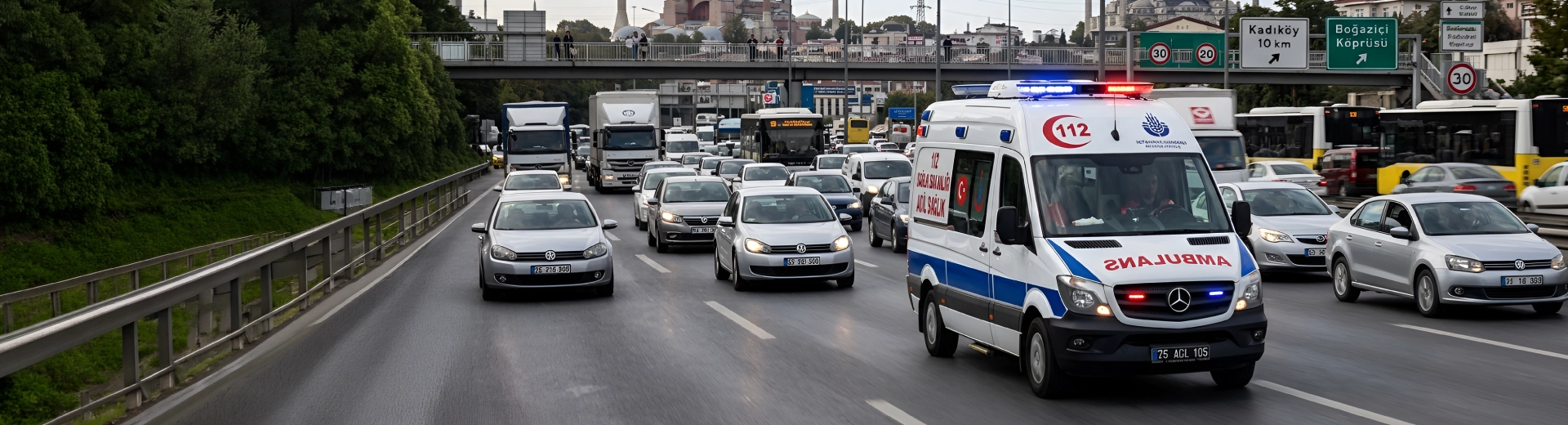
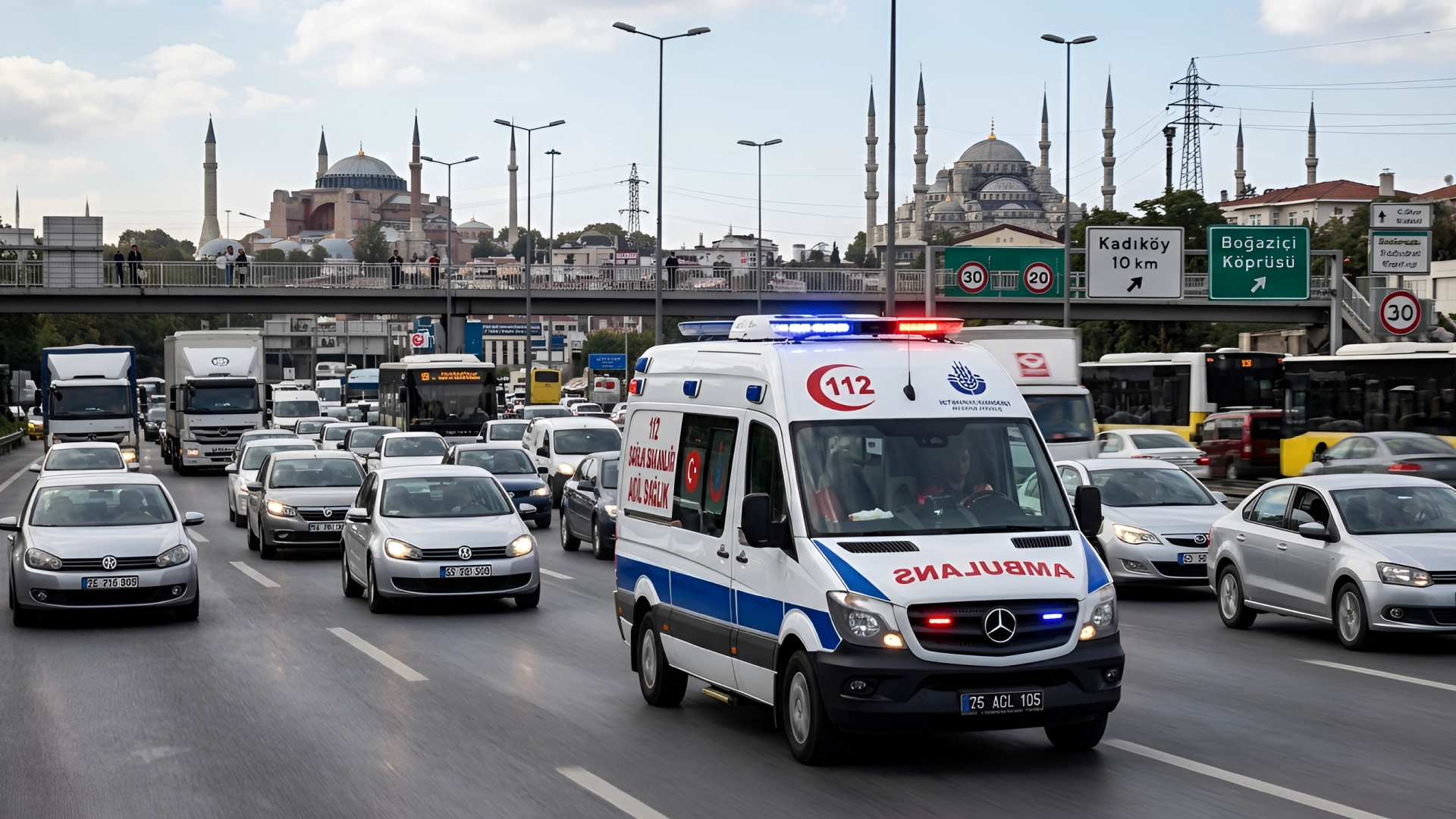
When right of way is mentioned, ambulances first come to mind because even seconds are valuable in medical intervention. While the ambulance is transporting a patient, going to an incident, or proceeding for emergency assistance, other drivers need to make way for it. Right of way in traffic becomes even more visible when healthcare services are racing against time.
Organ and tissue transplant vehicles also have a special position. Time loss in the transplant process can directly affect the chance of treatment. Giving way to transport vehicles with priority in traffic means being part of an invisible health chain.
Fire trucks must move quickly for fire, rescue, and similar emergency interventions. Law enforcement vehicles may also use priority when going to the scene of an incident for crime pursuit, public order, or security purposes. Disaster response vehicles, snow and ice removal vehicles, traffic service vehicles, and protection vehicles also have the same rights according to the scope of their duties.
Are Priority and Right of Way the Same Thing?
Priority and right of way are often confused in traffic. Right of way refers to the priority at intersections, main road-secondary road junctions, or as determined by traffic signs. For example, giving way to a vehicle coming from the right at an uncontrolled intersection falls under the right of way.
Right of way in traffic is a more specific situation. Certain vehicles, such as ambulances, fire trucks, or emergency police vehicles, may move before other vehicles during a mission. In such a case, ordinary intersection priorities take a backseat.
Knowing the difference allows for more conscious driving. Right-of-way rules apply in daily driving. When an emergency vehicle approaches, the right-of-way principle comes into play, and drivers are obligated to yield safely.
How Should Drivers Behave When Yielding?
The first step when hearing a vehicle with the right of way is to avoid panicking. When the siren sounds approaching, check your mirrors, understand where the vehicle is coming from, and if possible, move to the right lane. Completely stopping on narrow roads may be safer.
At intersections, the situation should be managed more carefully. Even if the green light is on, if an emergency vehicle requests passage, a controlled opening should be made. Drivers waiting at a red light can yield with small maneuvers, considering pedestrian safety and the intersection.
Following a vehicle with the right of way, accelerating, using the opening to your advantage, or tailgating the emergency vehicle is not advisable. Such behavior both reduces safety and makes it more difficult for other drivers to make informed decisions.
Common Misconceptions and Frequently Made Mistakes
Right of way in traffic should not be considered an unlimited right under all circumstances. Drivers of vehicles on duty must also pay attention to the safety of their surroundings. Sirens and warning lights are used to inform other drivers. However, proceeding uncontrollably without waiting for the road to be completely clear creates a risk.
Some drivers think that only ambulances should be given priority. However, right of way in traffic also applies to organ transplant vehicles, fire trucks, law enforcement, disaster response vehicles, and specific duty vehicles. Instead of wasting time trying to figure out which organization the vehicle belongs to, it is more appropriate to create a safe space.
Another mistake is noticing the siren too late when the music is playing loudly. In city driving, it is important to drive at a level where you can hear the surrounding sounds. Vehicles with right of way in traffic usually approach with both audible and visual signals. Careful driving makes it easier to notice them early. Awareness of right of way in traffic makes creating a corridor behavior a habit.
Why is Right of Way in Traffic Vital?
Right of way in traffic is directly related to time. An ambulance reaching a patient, an organ transplant vehicle reaching its destination, a fire truck responding to a fire, or emergency teams arriving at an accident scene can all have consequences measured in minutes.
The correct behavior of drivers doesn't just mean giving way to a single vehicle. Every safe corridor opened contributes to faster operation of emergency services. When the rule of right of way is followed, city traffic becomes more orderly and predictable.
From a societal perspective, the issue is more than just a simple traffic behavior. Right of way in traffic is a shared responsibility concerning everyone's safety. The vehicle you give way to today might be carrying the aid you or your loved ones need another day. Awareness of right of way in traffic is one of the most important parts of driving culture.
What to Consider When Using a Rental Car?
When you're driving a rental car, the rules of right-of-way in traffic still apply. The fact that the vehicle isn't yours doesn't change your responsibility to yield. Especially when driving in an unfamiliar city, it's important to frequently check your mirrors, adjust your speed according to the surrounding conditions, and remain calm when you hear a siren. When encountering a vehicle with the right-of-way, moving to the appropriate lane, not blocking the road, and avoiding sudden maneuvers are all part of safe driving. It's also important not to neglect your surroundings while focusing on navigation. Distraction is more likely to occur on a new route. Recognizing right-of-way signs early also increases safety when using a rental car.
Enterprise offers a comfortable experience for both city and intercity journeys with vehicle options suitable for different travel needs. By considering safe driving rules during the car rental process, you can both plan your trip more easily and comply with shared responsibilities in traffic.